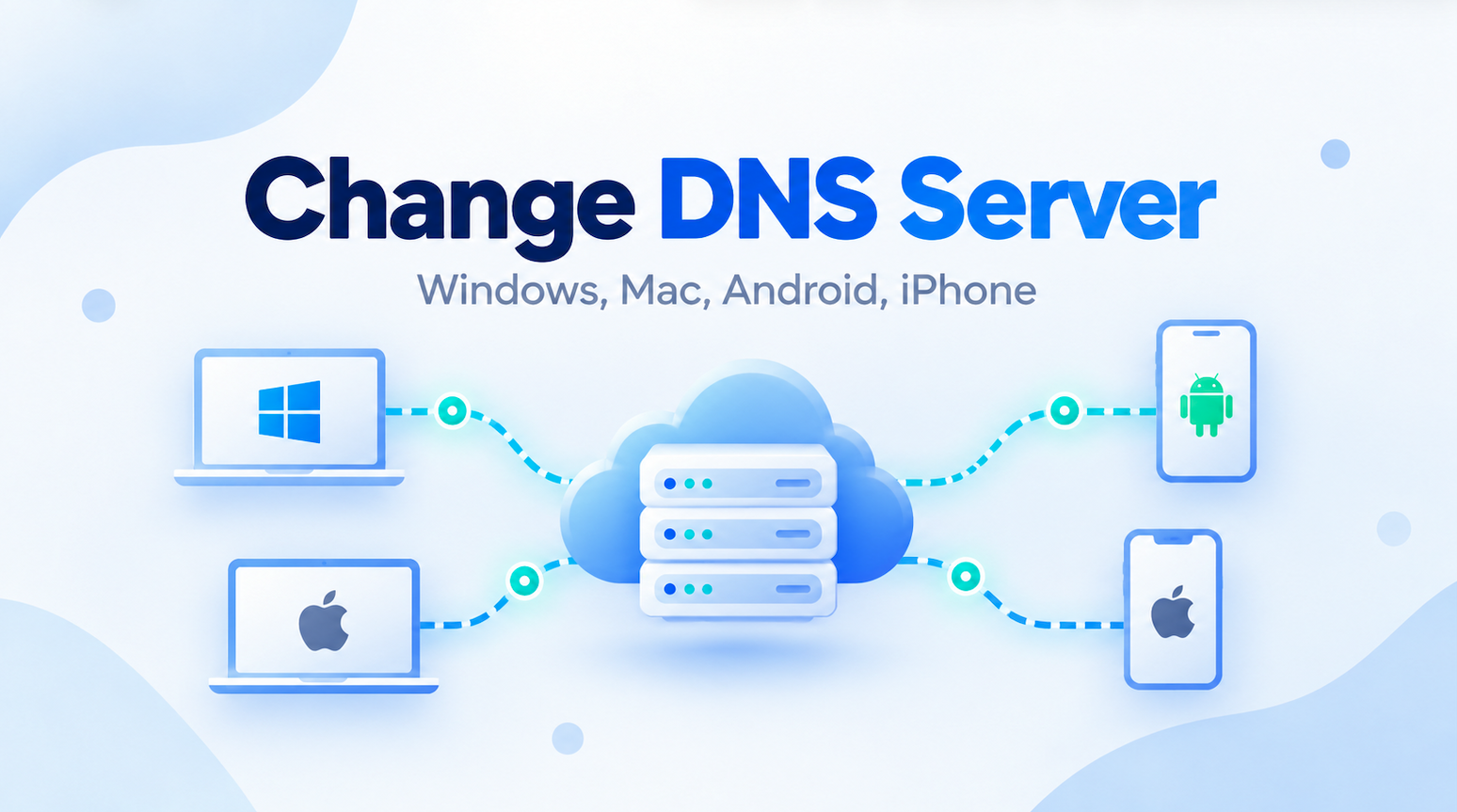
Most devices automatically use the DNS servers provided by your Internet provider or network. For many people, that works perfectly well and there is no reason to touch the settings. There are situations, however, when changing the DNS server can be useful. You may want to troubleshoot a slow or unreliable resolver, improve privacy, test … Read More “How to Change DNS Server on Windows, Mac, Android, and iPhone” »
Category: DNS
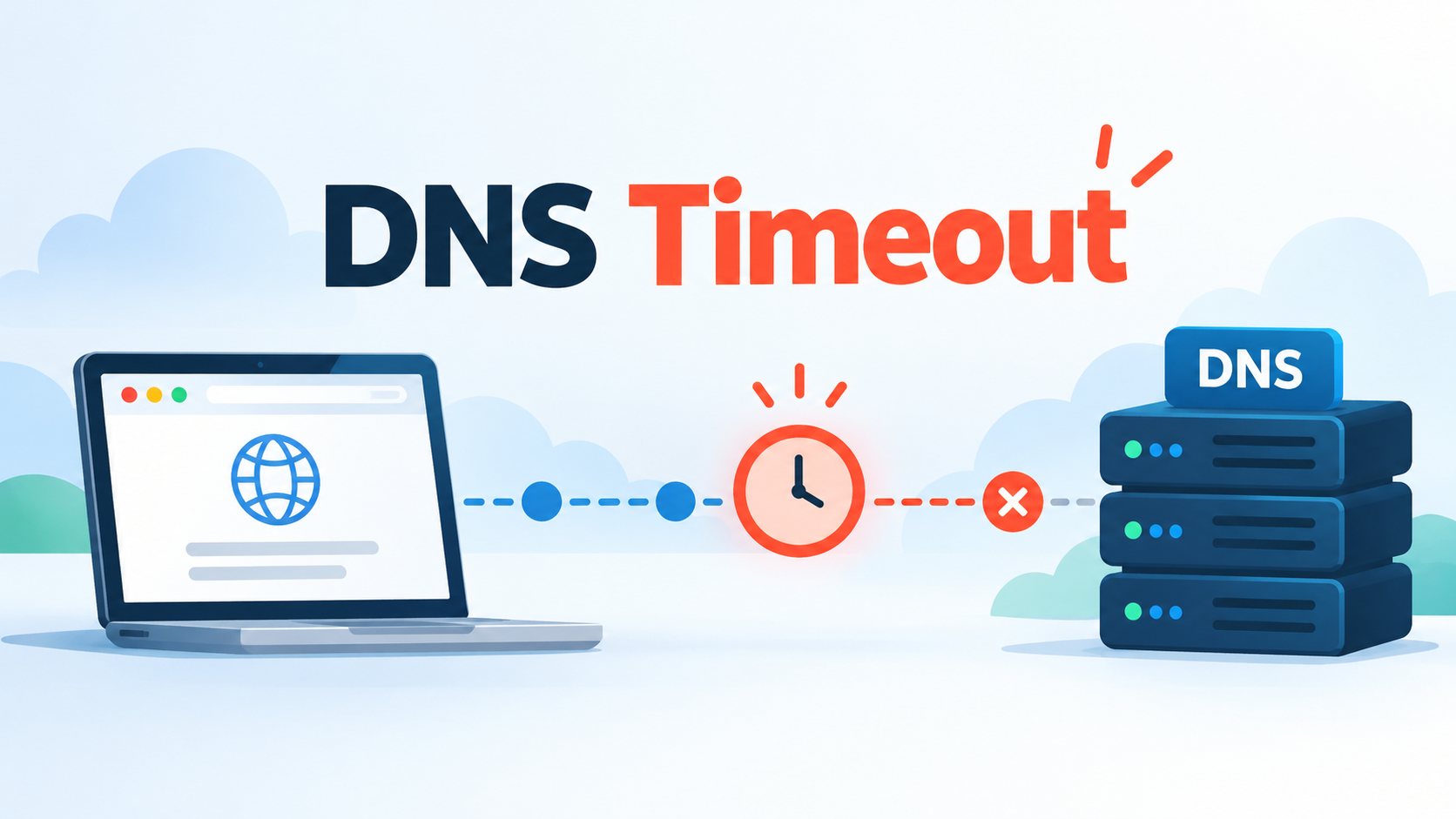
The Dig command is one of the easiest ways to investigate a DNS timeout because it shows whether a DNS server answers your query and how long the response takes. A DNS timeout happens when your device or a DNS resolver sends a query but does not receive an answer within the expected time. When … Read More “DNS Timeout: Causes and Fixes” »
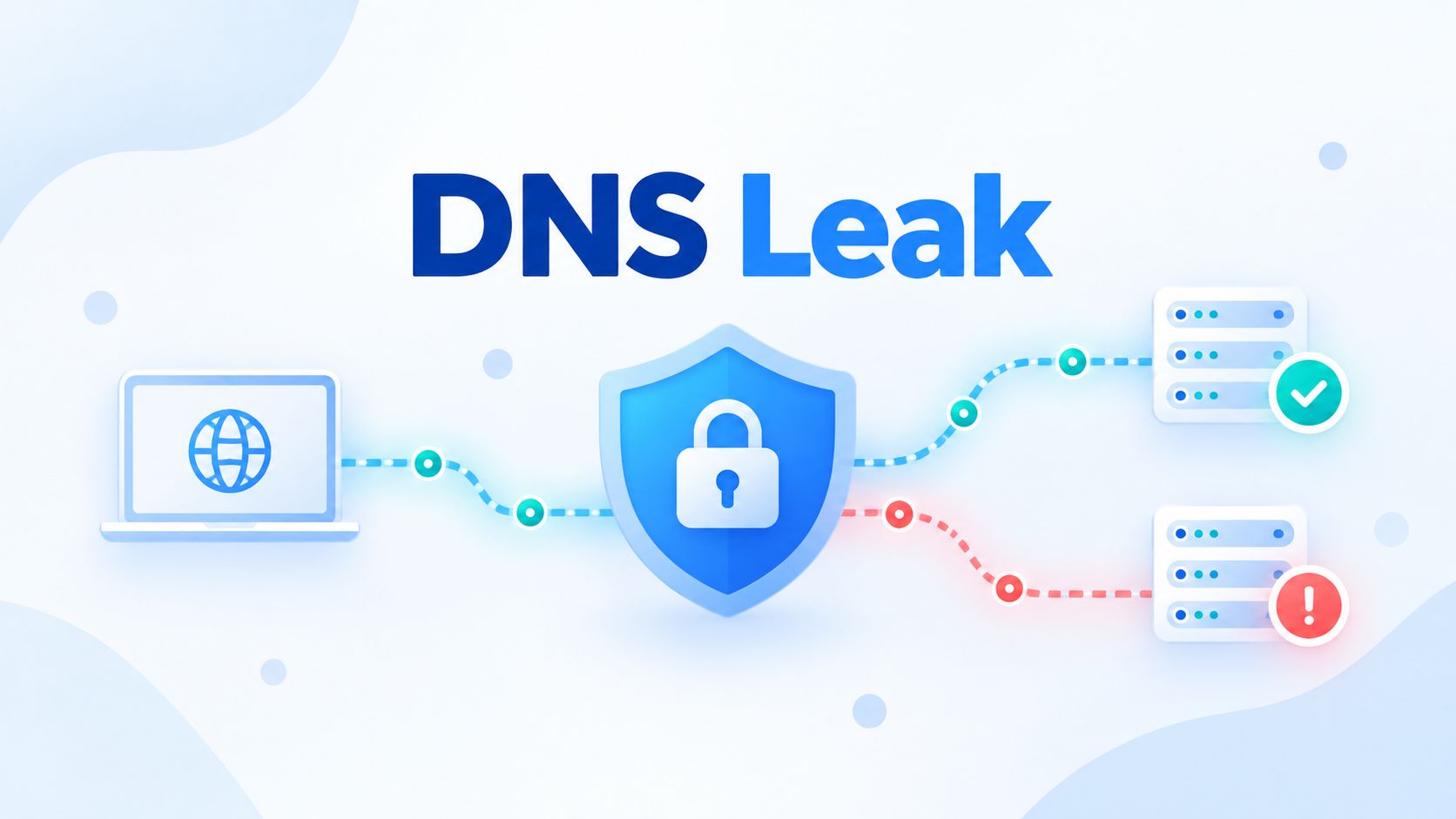
A VPN can hide your public IP address and send your Internet traffic through an encrypted tunnel. But there is one small piece of the connection that can quietly take a different route: DNS. When that happens, your website traffic may travel through the VPN while your DNS requests still go somewhere else. This is … Read More “What Is a DNS Leak? How to Test, Fix, and Prevent It” »
DNS Troubleshooting can feel complicated when a website suddenly stops loading, a domain points to the wrong server, or some users can access a site while others cannot. The good news is that most DNS problems become much easier to solve when you check them in the right order. Instead of changing DNS settings at … Read More “DNS Troubleshooting: A Step-by-Step Guide to Finding DNS Problems” »
DNS errors happen when the Domain Name System cannot complete a request as expected. They can prevent a website from loading, stop emails from reaching their destination, or cause applications and online services to become unavailable. Some DNS errors are temporary. Others point to incorrect DNS records, unavailable name servers, DNSSEC problems, or configuration mistakes. … Read More “Common DNS Errors Explained” »
Few Internet errors are more frustrating than “DNS server not responding.” Your Wi-Fi may still look connected and everything seems normal, yet websites suddenly refuse to open. Fortunately, the cause is often simple. A router restart, fresh DNS cache, or different DNS resolver may be all you need. When those quick fixes do not work, … Read More “DNS Server Not Responding: Causes and Fixes” »
Slow DNS resolution can make a website feel sluggish before the page has even started loading. In many cases, the delay is not caused by the website itself, but by how long it takes to translate the domain name into an IP address. The good news is that slow DNS can usually be traced back … Read More “How to Identify and Fix Slow DNS Resolution?” »
DNS over QUIC is a newer way to send DNS queries securely over the Internet. It combines encrypted DNS with the speed and connection handling of the QUIC protocol. For users, the goal is simple: keep DNS requests private, reduce delays, and make connections more resilient when networks change. What Is DNS over QUIC? DNS … Read More “What Is DNS over QUIC and How Does It Work?” »
DNS resolver is a key part of the Domain Name System (DNS), the technology that helps your browser find websites on the internet. Every time you type a domain name such as example.com into your browser, a DNS resolver helps find the IP address connected to that domain. Without them, you would often need to … Read More “What Is a DNS Resolver and How Does It Work?” »
Split-Horizon DNS is one of those DNS concepts that sounds more complicated than it really is. The idea is simple: the same domain name can return one answer to users inside a private network and another answer to users on the public Internet. This approach is often used by businesses that want employees to access … Read More “How Split-Horizon DNS Works and When to Use It” »